Thứ Ba, 18 tháng 10, 2011

2013 Porsche Boxster S - Spy Shots

The new for 2013 Porsche Boxster has been caught completely without disguise, and in arguably one of the most attractive settings we’ve ever seen for a (normally incognito) road test. Maybe Porsche was scouting for photo ops in the red rock desert landscape too? Whatever the case, this mid-engine roadster, decked out in silver paint and red leather interior, looks fantastic.

A Boxster with More Punch
Porsche has carefully evolved the Boxster shape. The proportions are the same, though the lines are much less soft and delicate. Strong character lines on the doors lead directly to larger side air intakes. The fenders have a sharp crease around the wheel wells, and the side mirrors have been moved from the A-pillars to the doors.
Up front, the next Boxster looks pretty similar to the previous generation – in these photos the headlights appear slightly more upright. At the rear, the trunk lid features an edgier, more elongated indentation for the third brake light. A tiny rear spoiler has been neatly integrated with the taillights, creating a much more dynamic and sportier design.

A brand new 2.5-liter 4-cylinder engine should provide the new Boxster with the performance to back up the looks. Apparently the new motor is capable of pumping out 360 bhp in a turbocharged format. The 3.4-liter flat-6 cylinder engine in the 2011 Boxster S currently serves up 310 bhp and 266 lb.-ft. of torque. A smaller engine could also boost the fuel economy and help trim curb weight.
The Boxster’s home is also moving early in 2013, from Finland to Austria. Magna Steyr will take over production from the Finnish firm Valmet. Look for the new Boxster to make its debut soon, most likely at the upcoming Los Angeles Auto Show in mid-November.

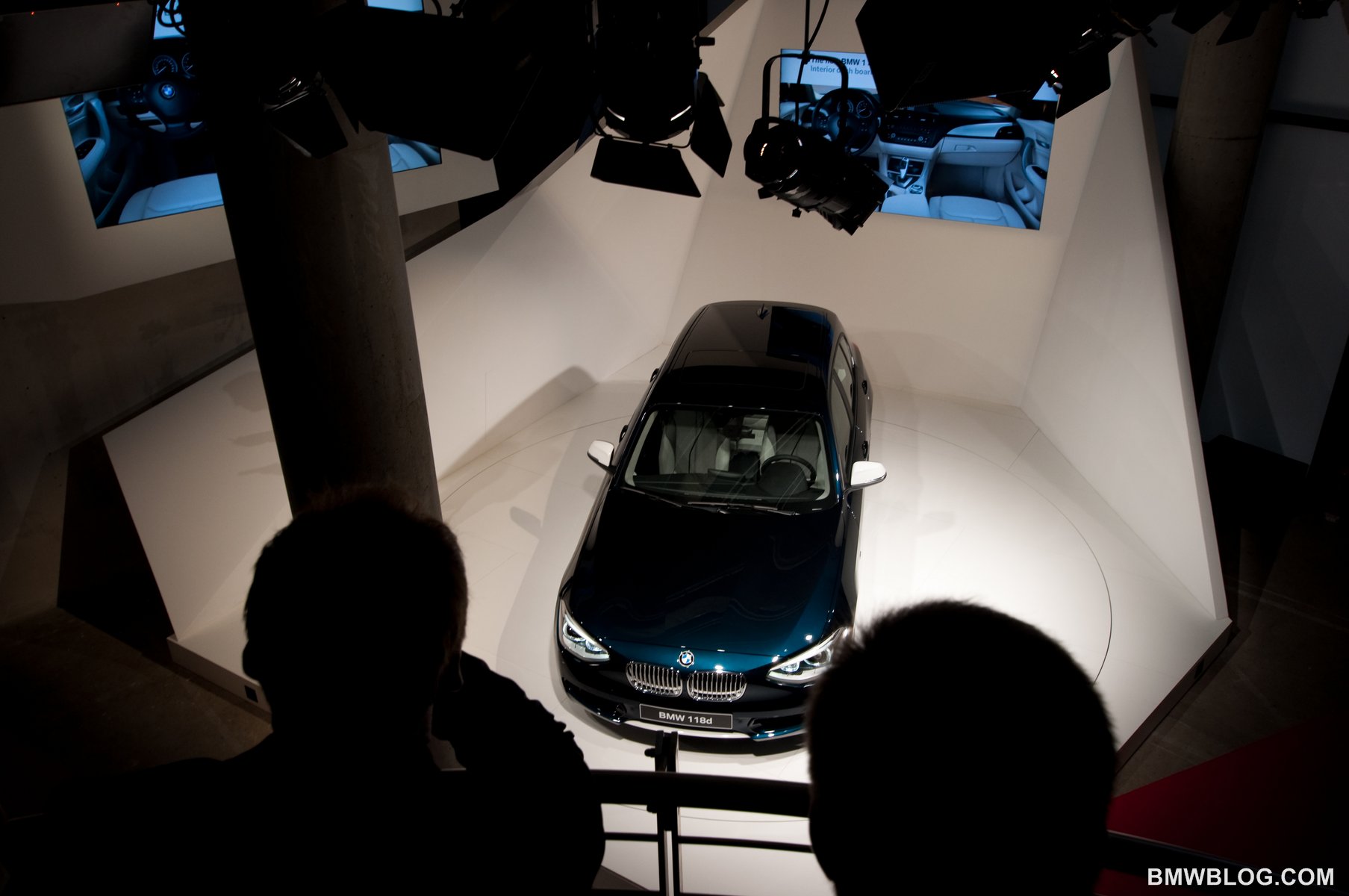
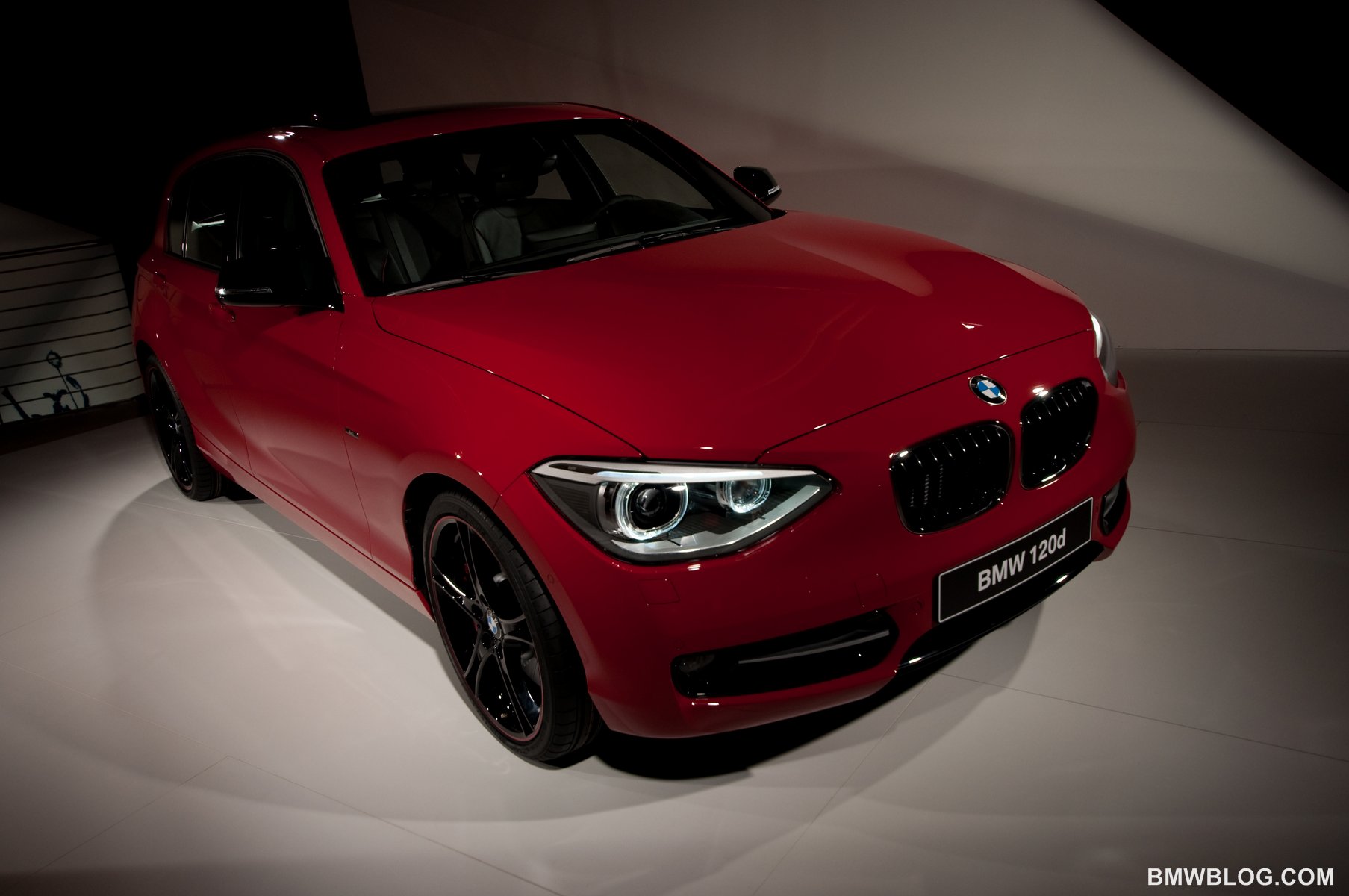
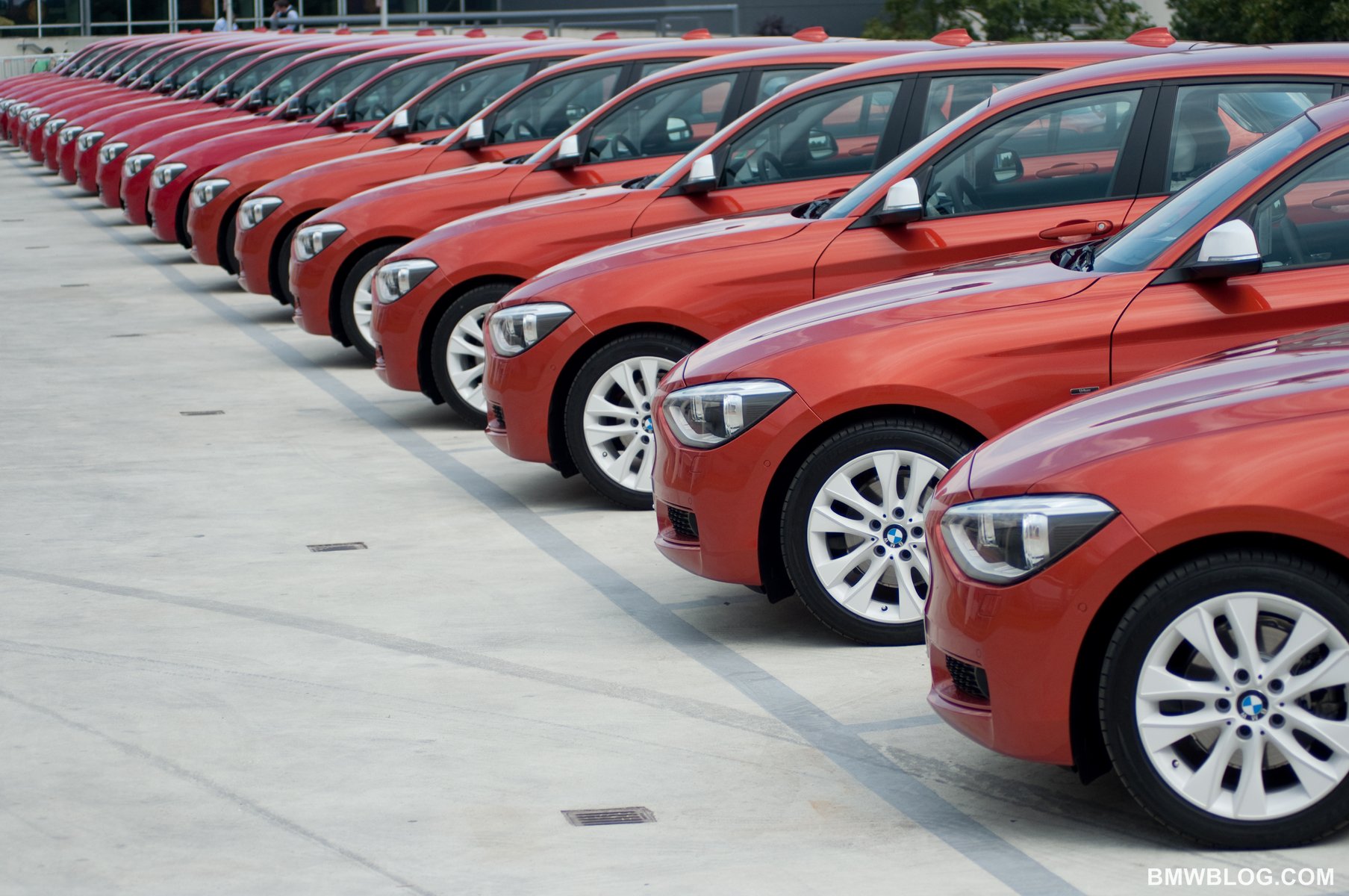
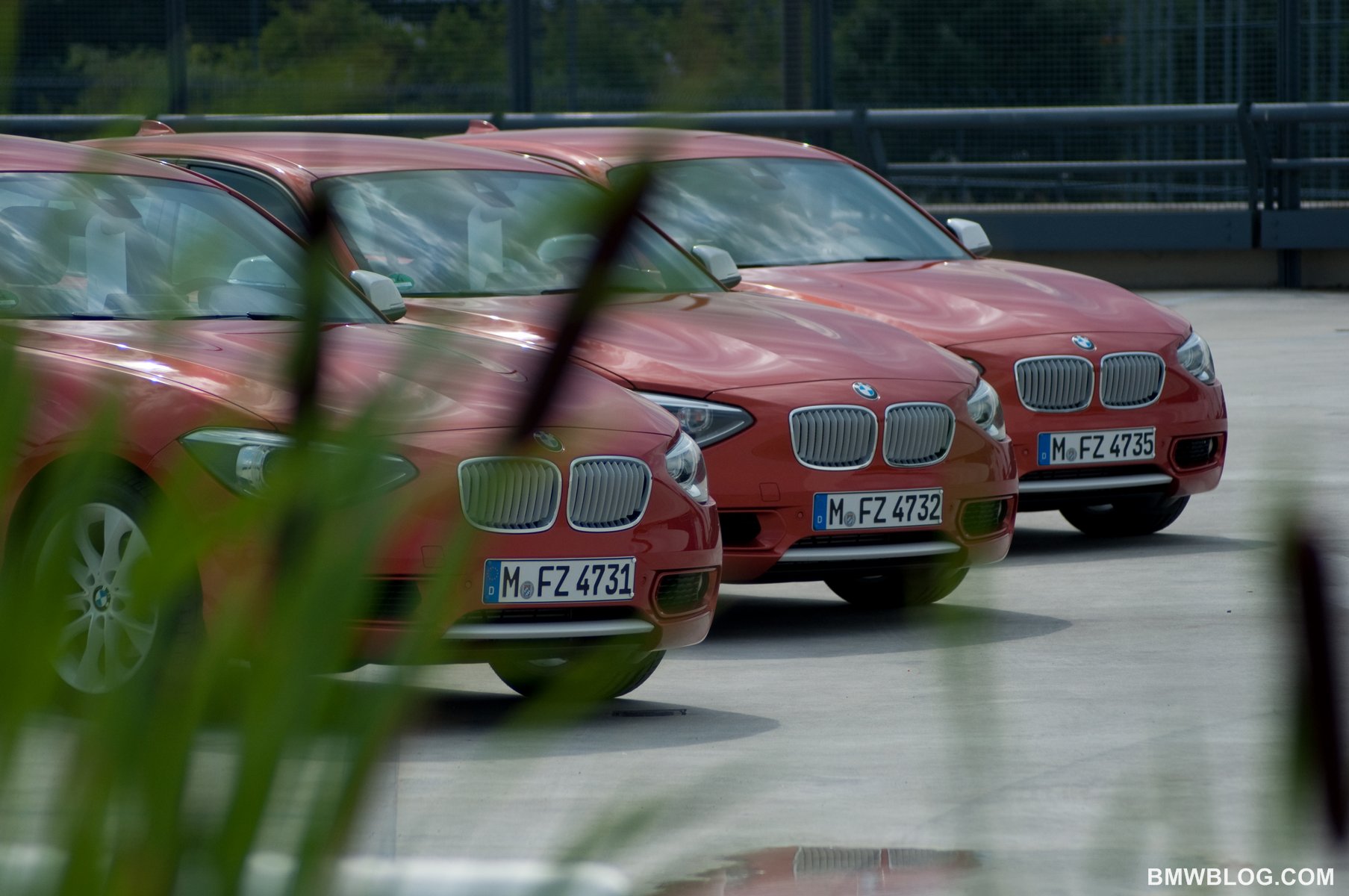
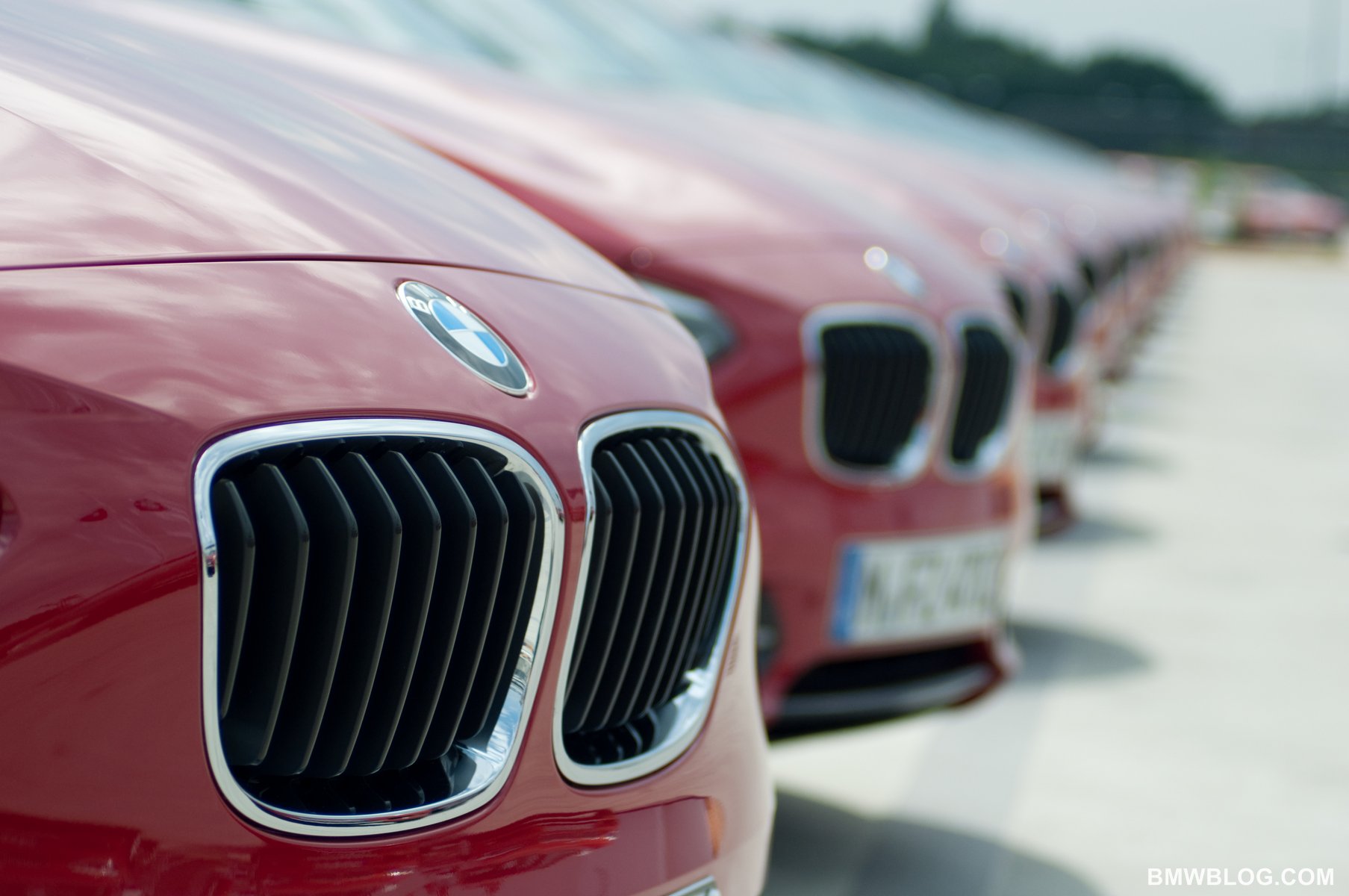
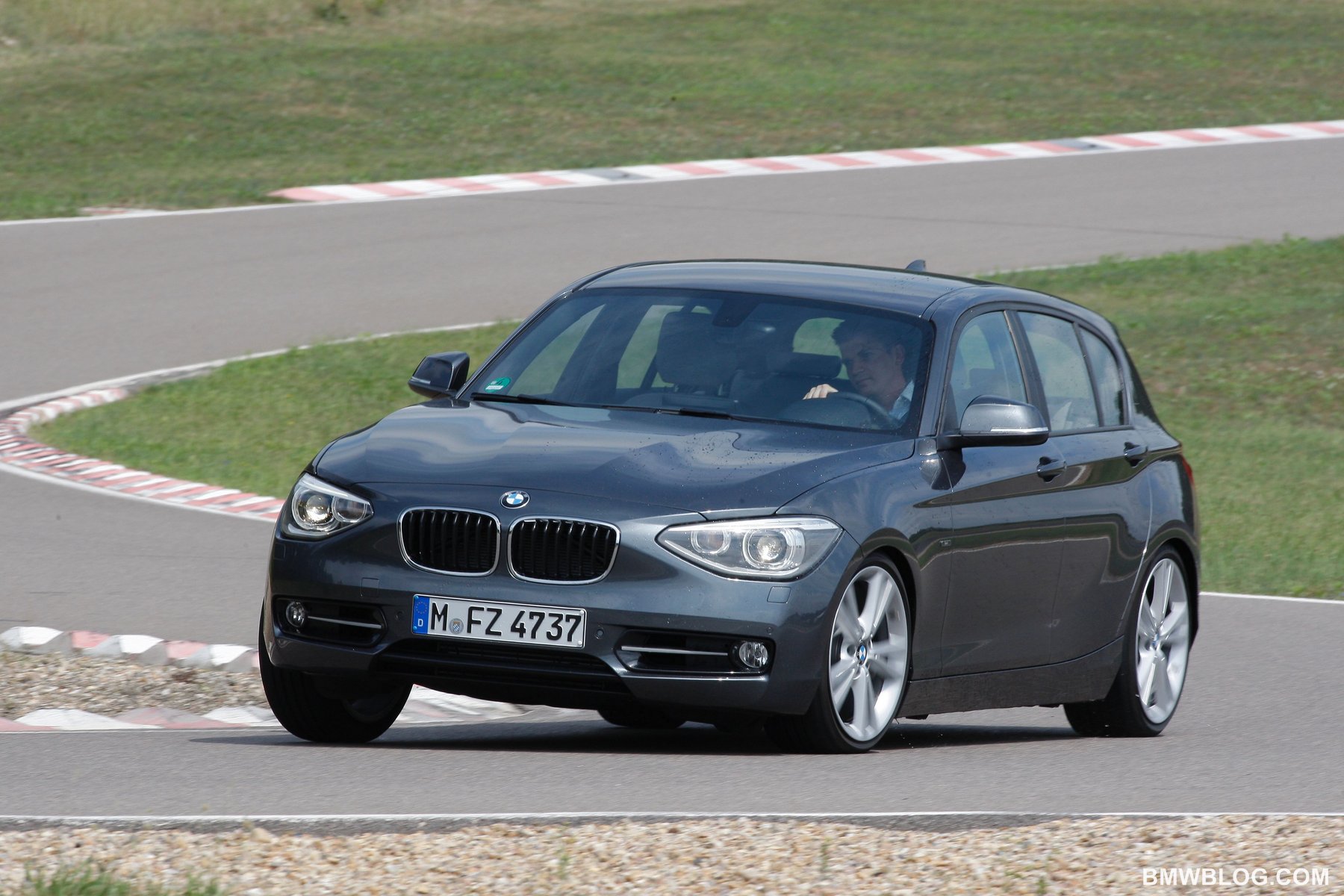
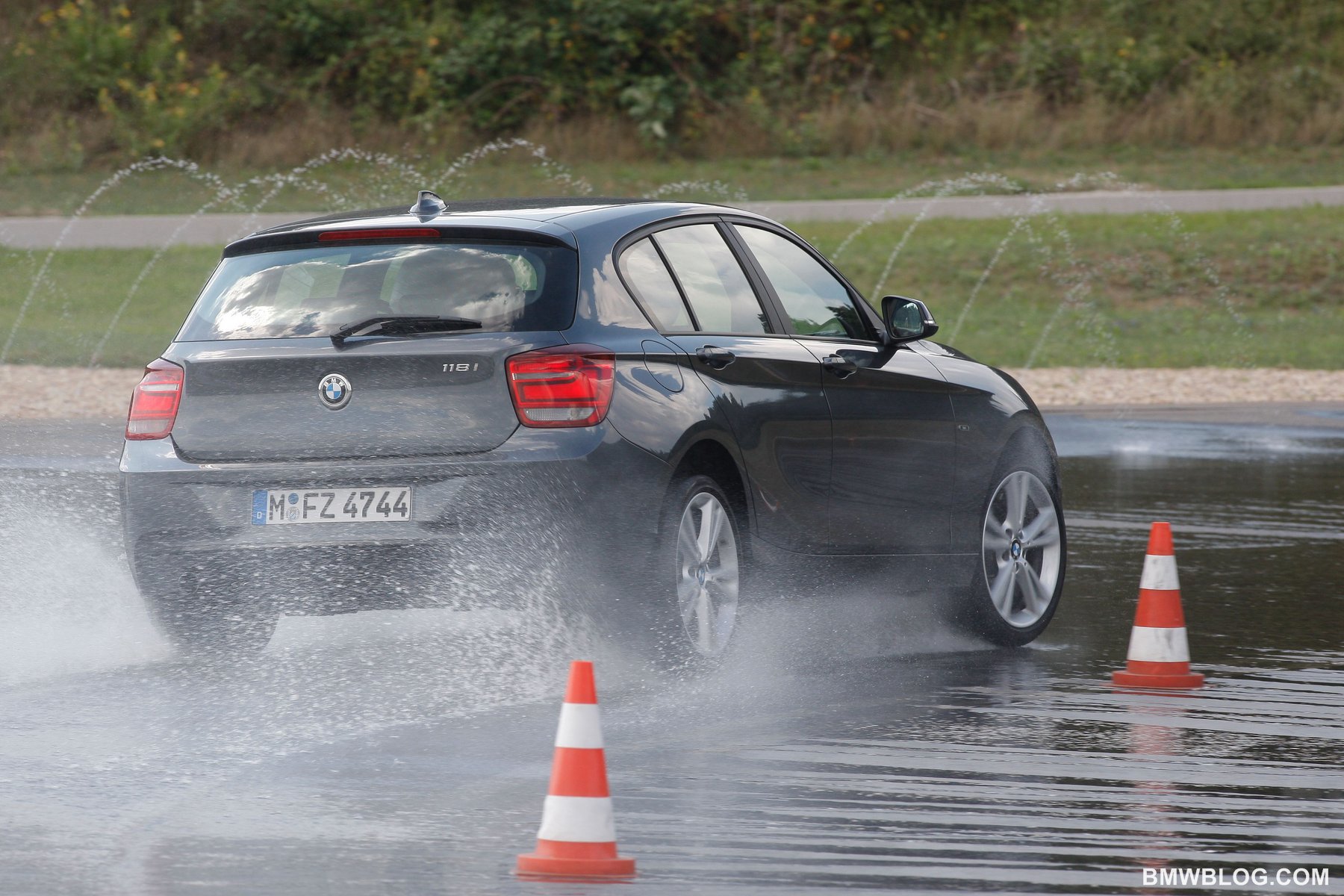
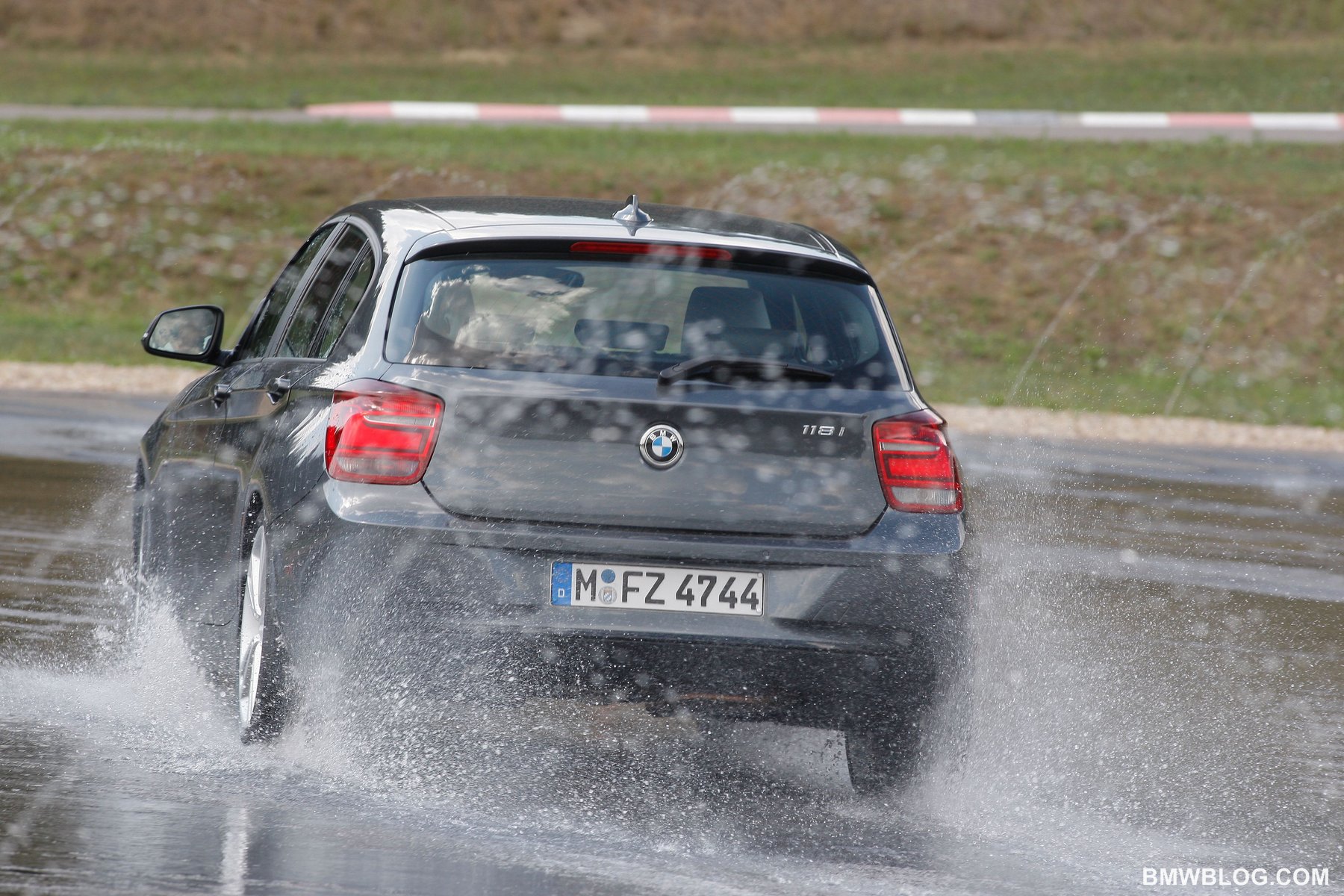
BMWBLOG First Drive: 2012 BMW 118i


BMW has launched their new F20 1 series 5 door hatch-back in the artistic and cosmopolitan city of Berlin, and BMWBLOG is reporting live from location to bring you our first driving impressions of the car. Curious how it handles? Wondering what it feels like behind the wheel? Read on…
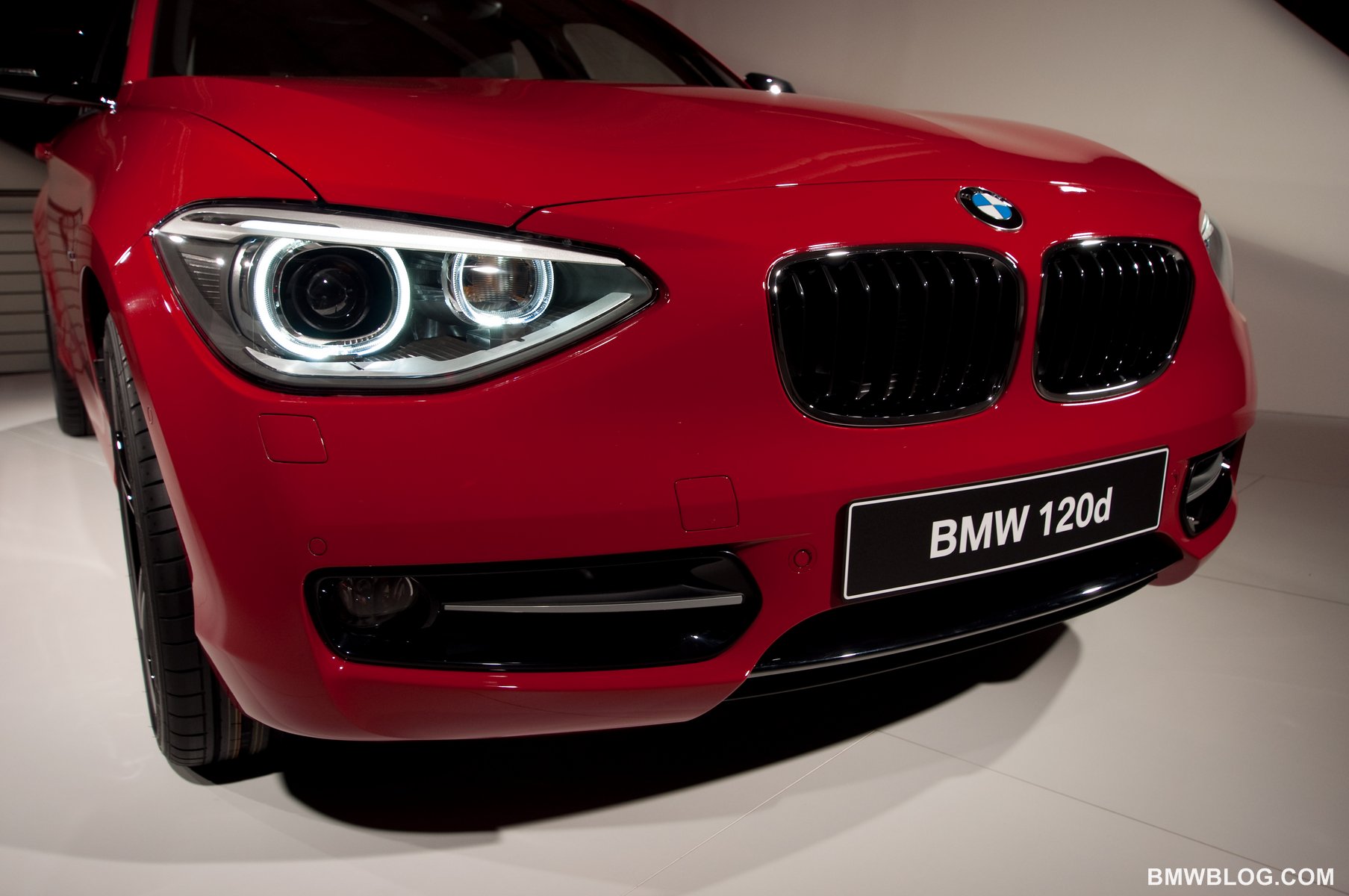
Approaching the new 118i Sport, the bold, provocative lines make sense. Whereas in photos most readers have found the new 1er to have polarizing looks, in person it is a different story. Among the international body of journalists here, everyone seemed to have positive conclusions on the exterior styling – including myself. Frankly, it’s hot from certain angles (front 3/4 for example) and clean from other angles at worst. We will bring you a styling analysis shortly, but first, let’s get down to business: how does BMW’s new F20 1 series perform?
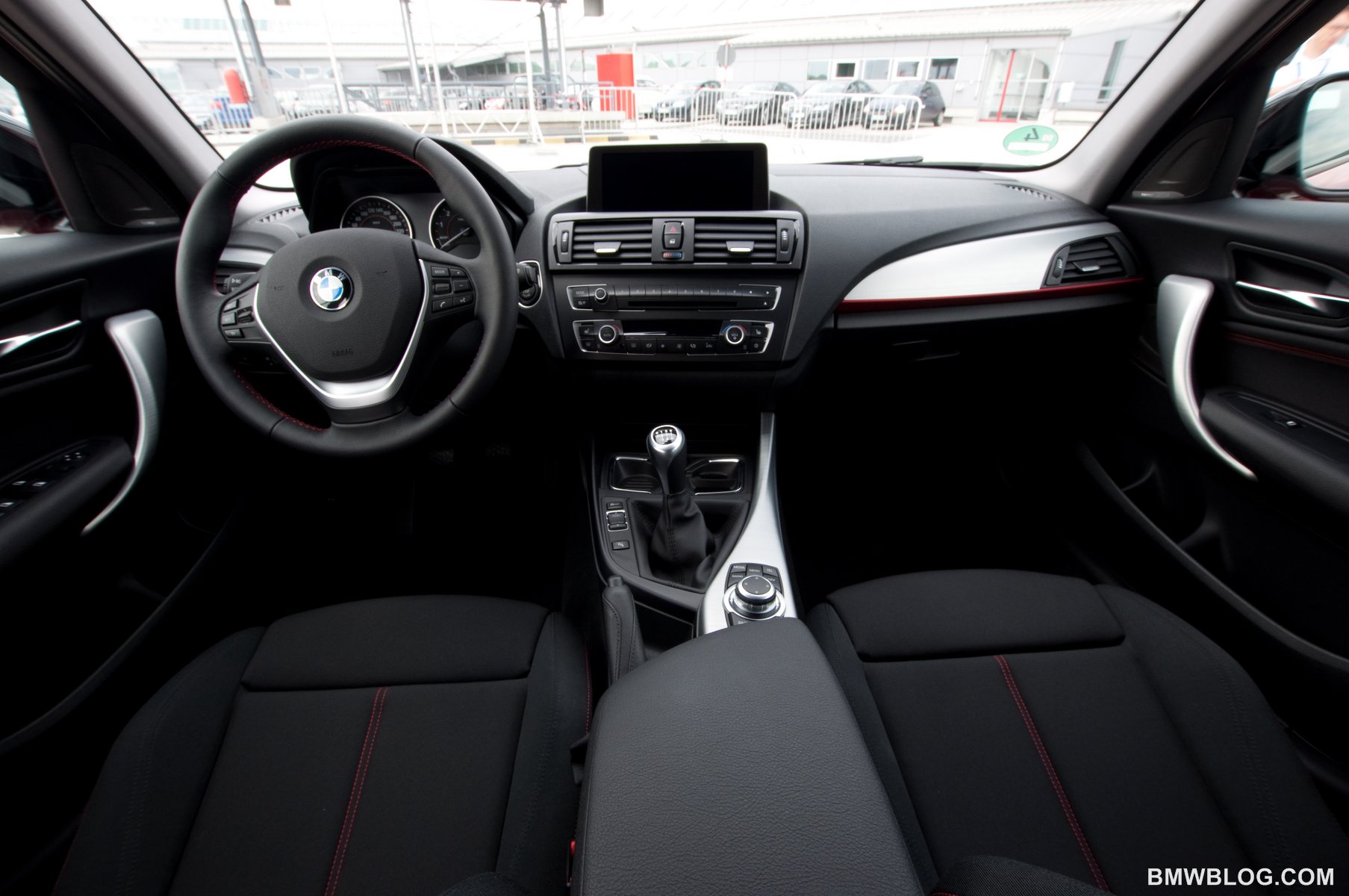
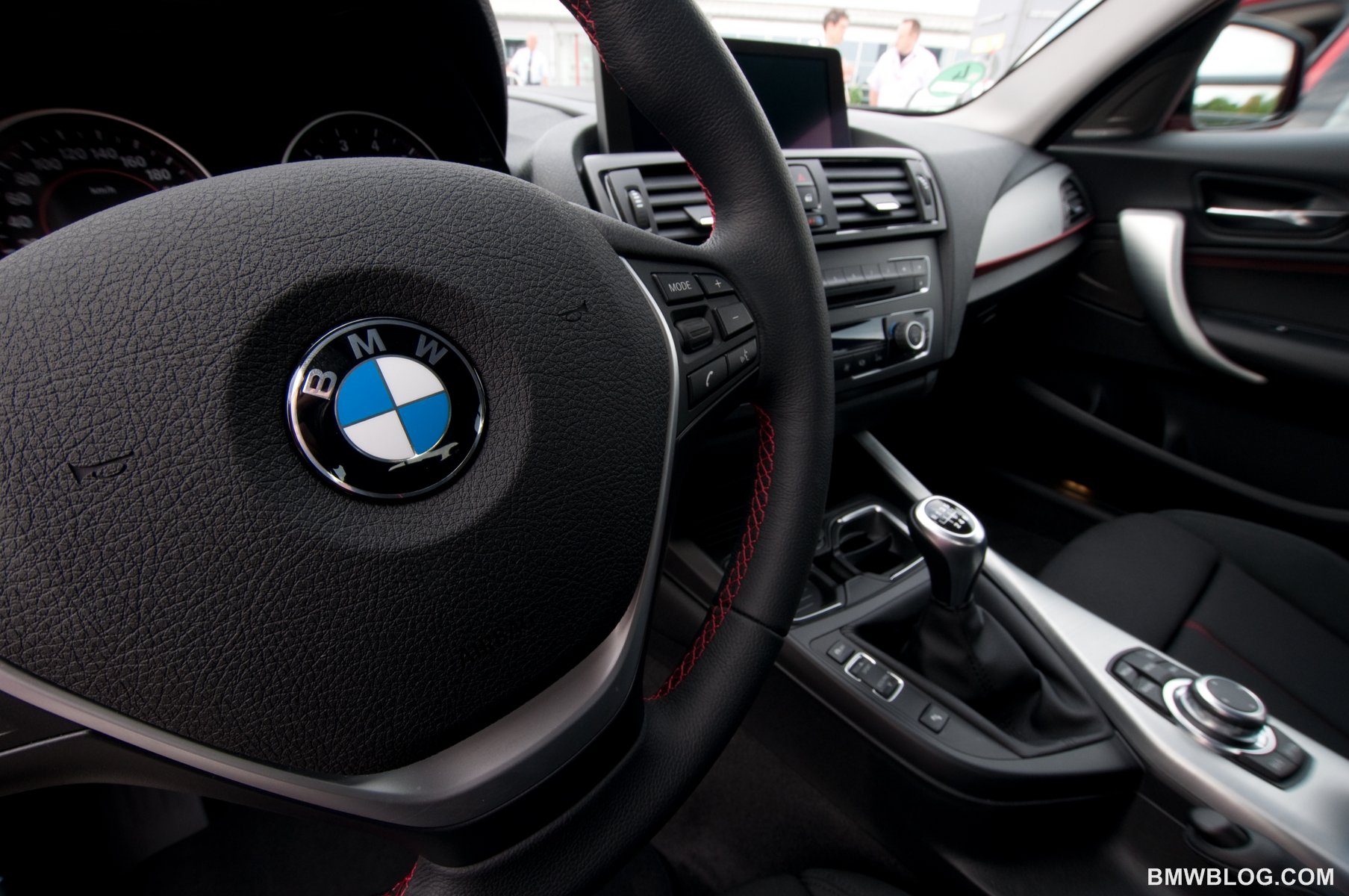
Settling in behind the wheel, you forget that you are in a 1 series. The cabin design is artful and luxurious – without question this is the most premium interior in the segment. The driver’s seat offers good support and I found the car to be spacious once belted inside. Hitting the starter button on my 1.6 liter twin-scroll turbo inline-4, a surprisingly baritone exhaust note filters inside.
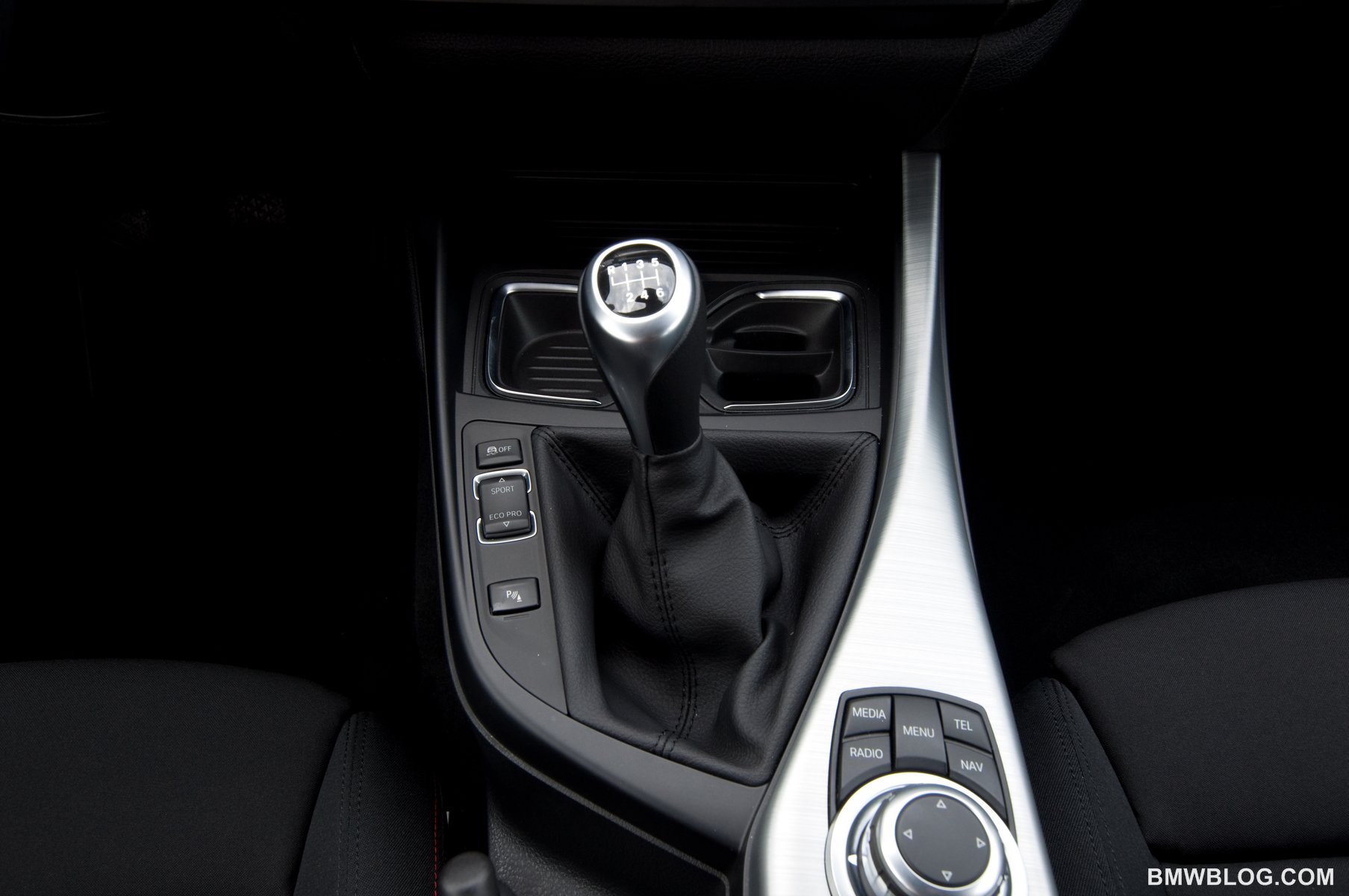
Setting off the controls are intuitively placed as is typical of BMW design, and everything falls to hand. Shifts from the 6-speed manual gearbox are crisp and relatively short throw. Clutch take-up is friendly even to beginners and pedal resistance is light – a positive in heavy traffic. Weaving through traffic, the chassis begins to come to life. The car is nimble and easy to thread along congested roads. At first, the car feels larger than it really is thanks to your view over the hood, peering over the bulbous and muscular hood and fenders. After spending a few minutes in traffic however, it shrinks in size and perhaps feels more compact than its actual dimensions – a compliment to any car’s handling dynamics.
The suspension set up is taught but not firm and offers excellent damping over bumps in the road. BMW admitted they purposefully selected roads along our route that were extremely bumpy with poor surface quality to showcase the comfort and composure of the chassis in all real-world driving conditions. Needless to say, the new 1 series passed with flying colors. This 118i was equipped with the sport suspension and while it was a touch soft to my taste (my taste including an affinity for the racetrack), it had an overall good feel, mild body roll and fun character. Most will find it perfectly sporting to their taste, and some grumpy drivers may even find it too firm, thus opting for the ‘urban’ package which offers a higher ride height by 10 mm and softer springs / damping.
Leaving the city, the 118i feels perfectly at home on the highway. Cabin noise is muted and the array of driver aids make for a safe trip. Included among them is a lane departure warning system, available for the first time on a compact car in this segment. After a long sleepless flight, I really appreciated this feature for its security should I have gotten sloppy and wandered to the edge of my lane. BMW’s connected drive also goes a long way to keep you safe and on track, with posted speed limits shown on the dash as a small road sign, and passing zones indicated just to the right of the posted speed. I found this feature particularly helpful while on the autobahn as the unrestricted areas were flashed onto the screen.
Time to find terminal velocity. Squeezing as many revs out of 5th gear as possible (6th gear is too tall to accomplish top speed), the 118i proudly approached 230 km/hour on the autobahn. This performance from a 1.6 liter 4 cylinder is highly impressive. At these speeds the car is stable and poised, feeling planted and secure. Braking back down to speed felt equally as secure, and the car remained planted without any nervous jitters from the rear. The brakes felt good with plenty of bite and stopping power from all speeds.
One of the best character traits of the new 1 series is its overt turbocharging. The 1.6 liter was full of playful turbo humor, audibly whining as the turbo spooled under throttle, and hissing as the waste gate dropped the boost pressure. What fun! Why not embellish the cheerful character of this turbo engine instead of trying to mask its forced induction? BMW has done a great job allowing the new 118i’s engine to shine through and delight – not just in performance, but in the sound department too.
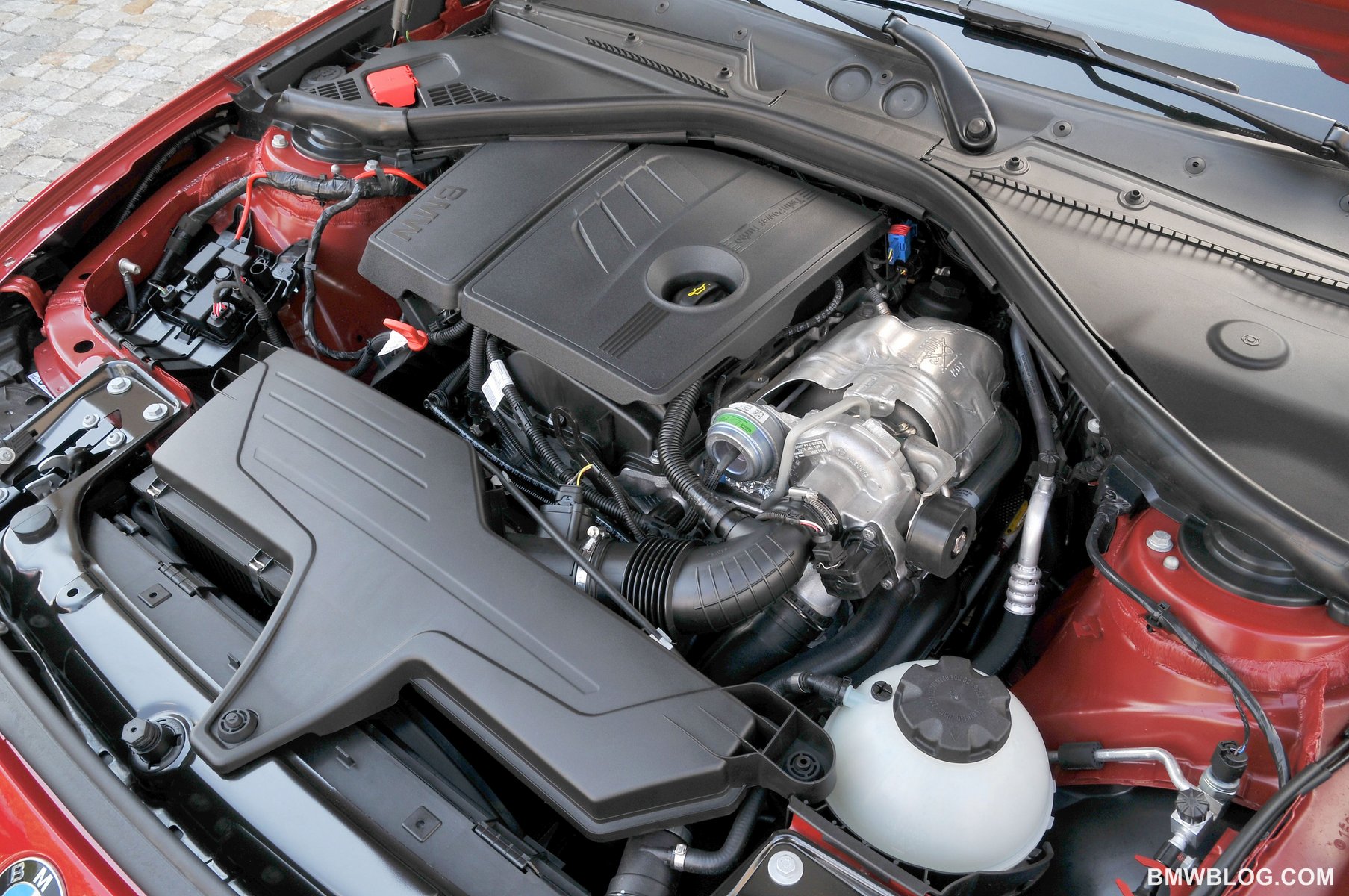
The 1.6 liter inline-4 is equipped with Valvetronic, double VANOS and direct injection along with its turbo. The results are staggering from a 1.6 liter: 170 hp, at 4,800 rpm, 184 lb ft of torque from 1,500 rpm to 4,500 rpm, 0-60 in 7.4 seconds, and a blistering top speed approaching 230 km/hour (we believe it was good for more, but we had to get on the brakes for a slower car meandering into our lane). Pivotal to the new 4 cylinder’s performance was its balance and smoothness. Honestly, this was the smoothest 4 cylinder I’ve ever encountered and while it idles a bit rough, above idle it becomes silky – almost fooling you in the cylinder-count department for an inline-6.
And now the moment we’ve all been waiting for: an analysis of the new 1 series electromechanical assisted steering feel. It’s not bad. I would even say it’s good. Sure, it does remain just a touch ‘rubbery’ at moments, usually around dead center and we also felt that bumps and nuances of the road where a touch too muted, but BMW has managed to massage the system to all but eliminate this feeling. Is it as raw and precise as the hydraulically assisted systems of yesteryear (or the current M car lineup?). No. But it does have good weighting and decent feedback. Call us crazy though, as we are looking at this topic through race-track shaded lenses. As a daily driver prone to back road blasts, you will find the steering positive and worthy of the roundel.
Knowing that the above conversation would be had, BMW added a toggle switch that incorporates steering feel into the matrix. Moving from Comfort mode to Sport +, the steering tightens up a bit and begins to transmit more from tire patch to palms. We left the driving mode in Sport + for most of the time to enjoy this improved steering feel, along with a more responsive engine mapping and sound.
At the opposite end of the spectrum is Eco mode which offers real time hints and suggestions towards achieving better economy. Both your throttle angle and gear selection are analyzed and based on several perimeters the system will determine the most efficient driving approach. BMW coined it “Eco-tainment” during their press release and we like the term. After all, away from spirited driving you need a challenge, so why not hyper-mile? The extra savings can help you save for your next track day, so there is a meaningful bonus.
The new 1 series comes equipped with Harmon-Kardon sound and the system sounded great no matter the genre of music, windows up or down. You get the feeling that BMW has designed this car to suit a young, energetic demographic. It constantly surprises and impresses as you get acquainted behind the wheel. The only thing missing from our ‘fun factor’ was a sun-roof, but of course this is available as an added option.
We could go on for some time about our experience behind the wheel, but this article is intended as a first drive snippet to wet your appetite for more. In summary, we were deeply impressed with BMW’s new 1 series and its fun, playful yet poised and classy demeanor. Stay tuned for further reports including a styling analysis and race track performance analysis.

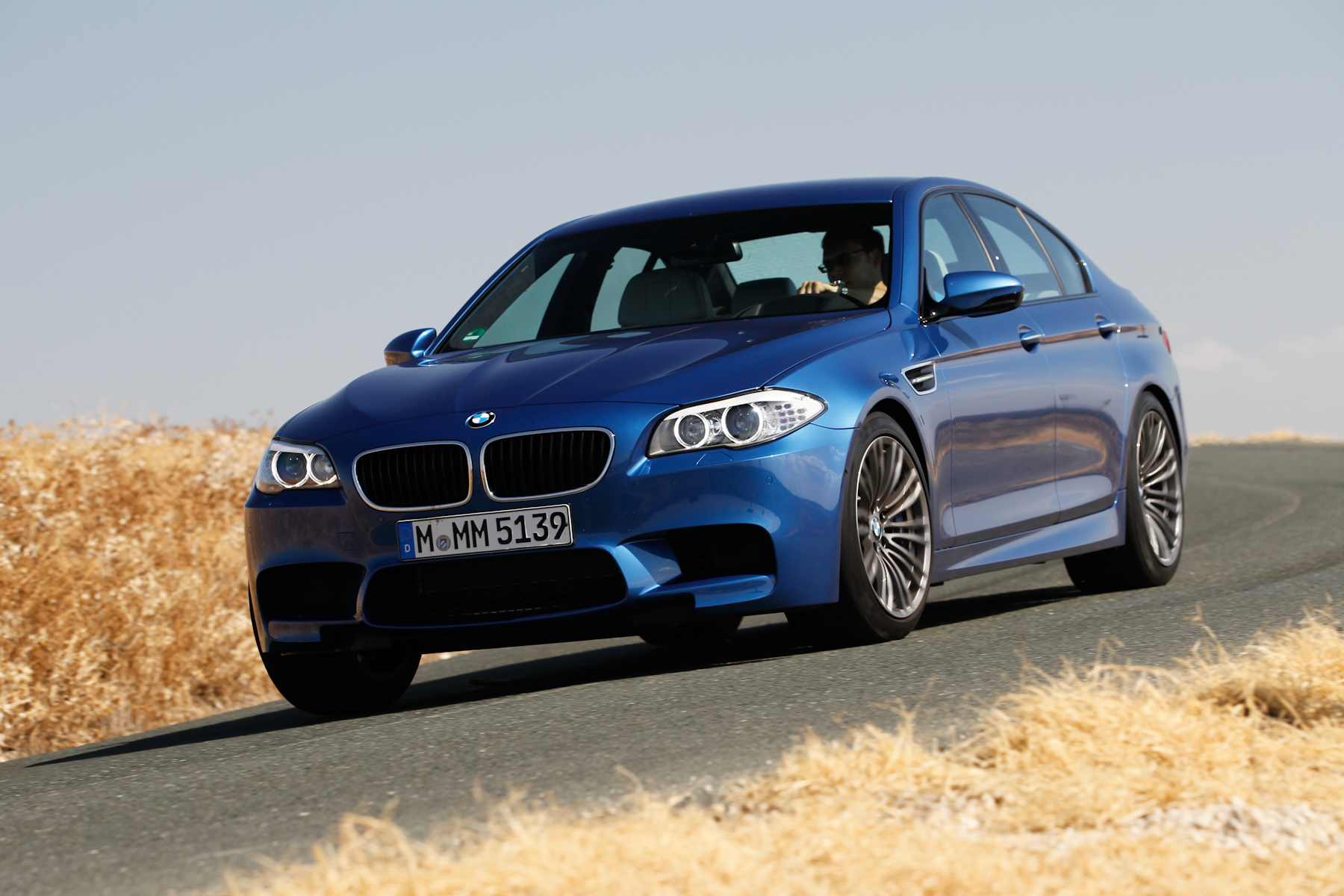
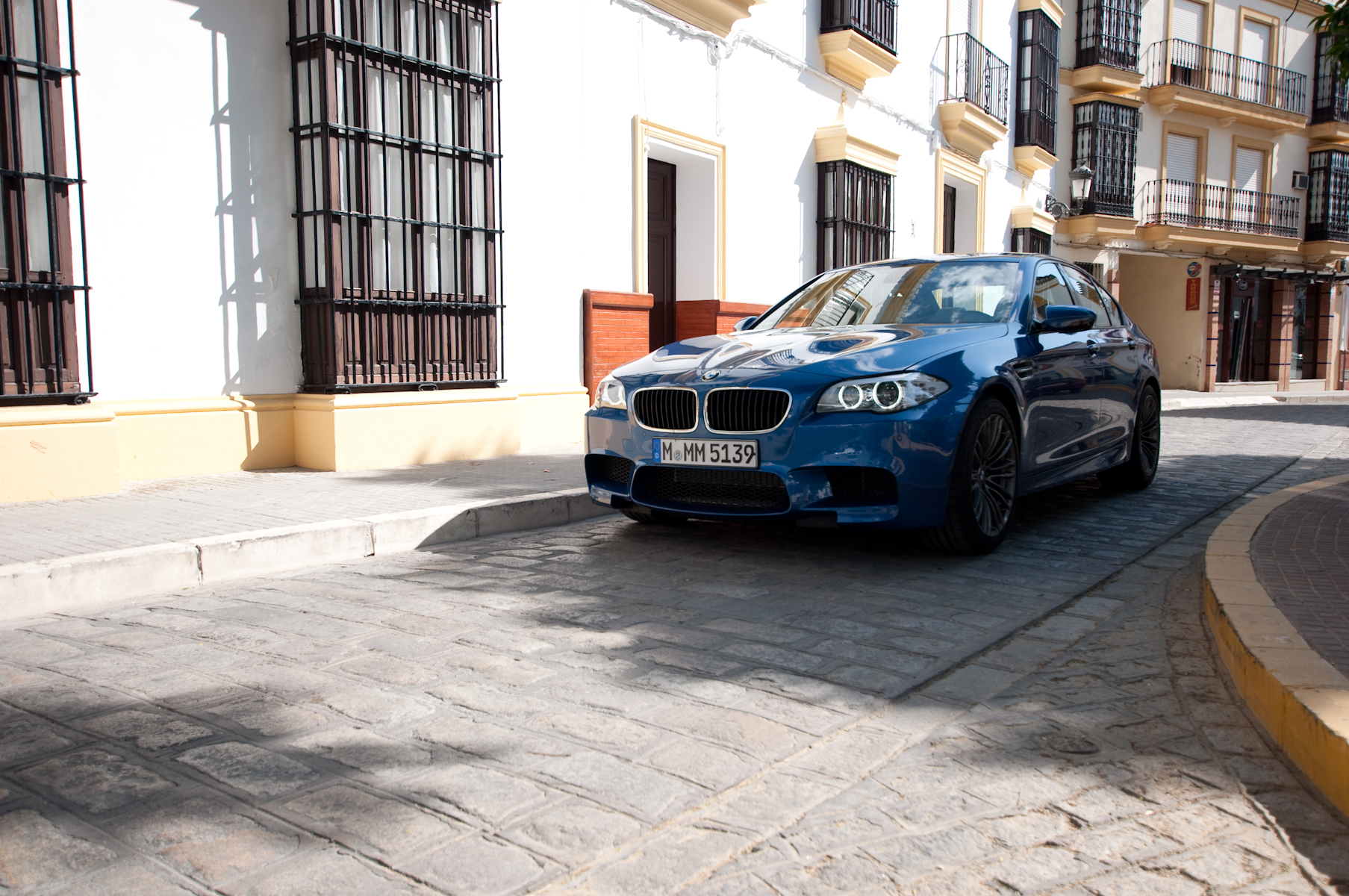
2012 BMW M5 Test Drive: The Engine is the Heart of the Beast


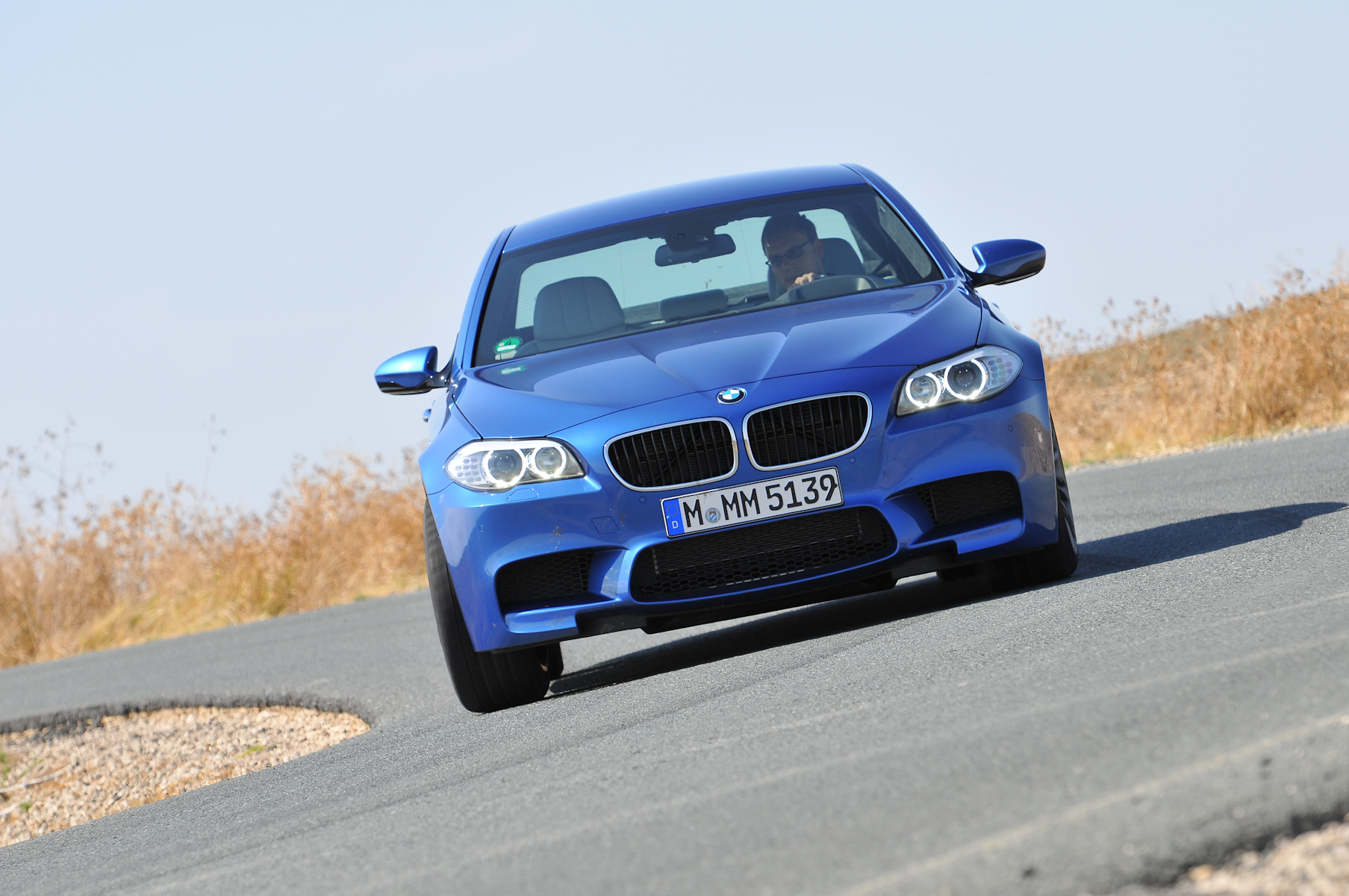
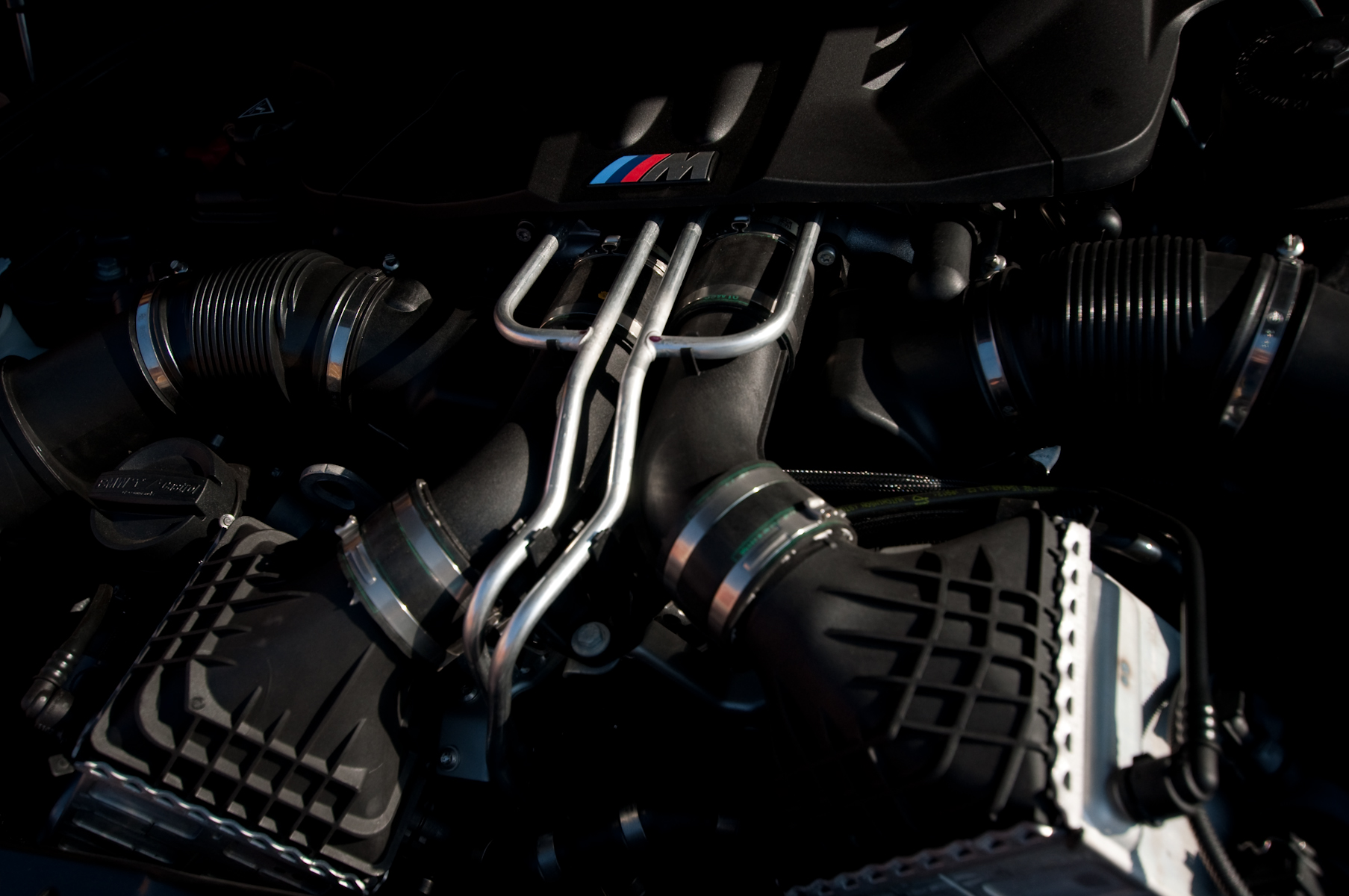
Laying quietly under a thin sheet of aluminum is BMW M’s latest technological marvel. Known internally as the S63tu (technical update), this latest M engine is an advancement over the previously employed S63 V8 in the X5/M and X6/M “Super-utes.” The basic layout and structure is the same, with both the S63, and S63tu sharing the same block, head, and the majority of components. Both engines are Twin Turbo, Twin Scroll 90′ V8 units featuring BMW’s patented cross-bank exhaust headers, continuously variable valve timing on both the intake and exhaust side, and high precision direct fuel injection.
However, a divergence occurs due to the new M5′s higher compression ratio of 1:10. In fact, BMW M have made so many changes to the original S63 V8 found in the X/M cars that they have labeled it a “newly developed” engine. To create the higher compression ratio BMW have fitted newly shaped pistons. Boost pressure has been dropped by 0.1 Bar, but larger intercoolers have been added. The turbo chargers themselves are also new, feature a larger turbine diameter. A new valvetrain has been added wherein BMW has used Valvetronic variable valve lift throttle the intake, and throttle bodies exist in the engine, but they are in hibernation, used only in “limp home” mode. BMW has also completely revamped the electronic engine management in nearly every parameter, resulting in several improvements including a higher redline, now found at 7,200 rpm.
You’re probably wondering: with all of these changes, how come the new M5 only gained 5 horsepower over the X/M cars? The short answer is, BMW have chosen to focus on efficiency and drivability (read: throttle response) over all-out horsepower. Is the M division capable of squeezing more power out of the new M5 engine? Undoubtably. But as history testifies, massive horsepower has never been what M cars are truly about.
So how does efficiency compare to the previous generation E60 M5? The new F10 M5 drinks 30% less fuel – a staggering figure no doubt – while producing 10 percent more power and 30 percent more torque. This increase in efficiency will be greatly appreciated by all – even those who believe global warming is a scam – because as consumption is reduced, range in increased, which means fewer stops at the petrol station, or potentially no stops on your lengthy road trip (especially considering the massive 80 Liter fuel tank). On the EU test cycle the new M5 managed 9.9 Liters/100 Km (28.5 mpg). Those who aren’t stuck on the couch watching conspiracy theory movies will also appreciate the reduced emissions, now down to a very un-supercar-like 232 g/km in the EU5 test cycle.
One of the defining features of the M5′s M engine is its compact layout, placing both turbos and catalytic converters inside the ‘V’ of the 90′ cylinder banks. Like too many people on the dance floor, things get pretty cramped and hot in this small space. Engine cooling is therefore of paramount importance, and an extremely powerful cooling system including large intercoolers have been used to meet this demand. The front end aerodynamics have also been sculpted to guide sufficient airflow into the radiators and around the engine and brakes.
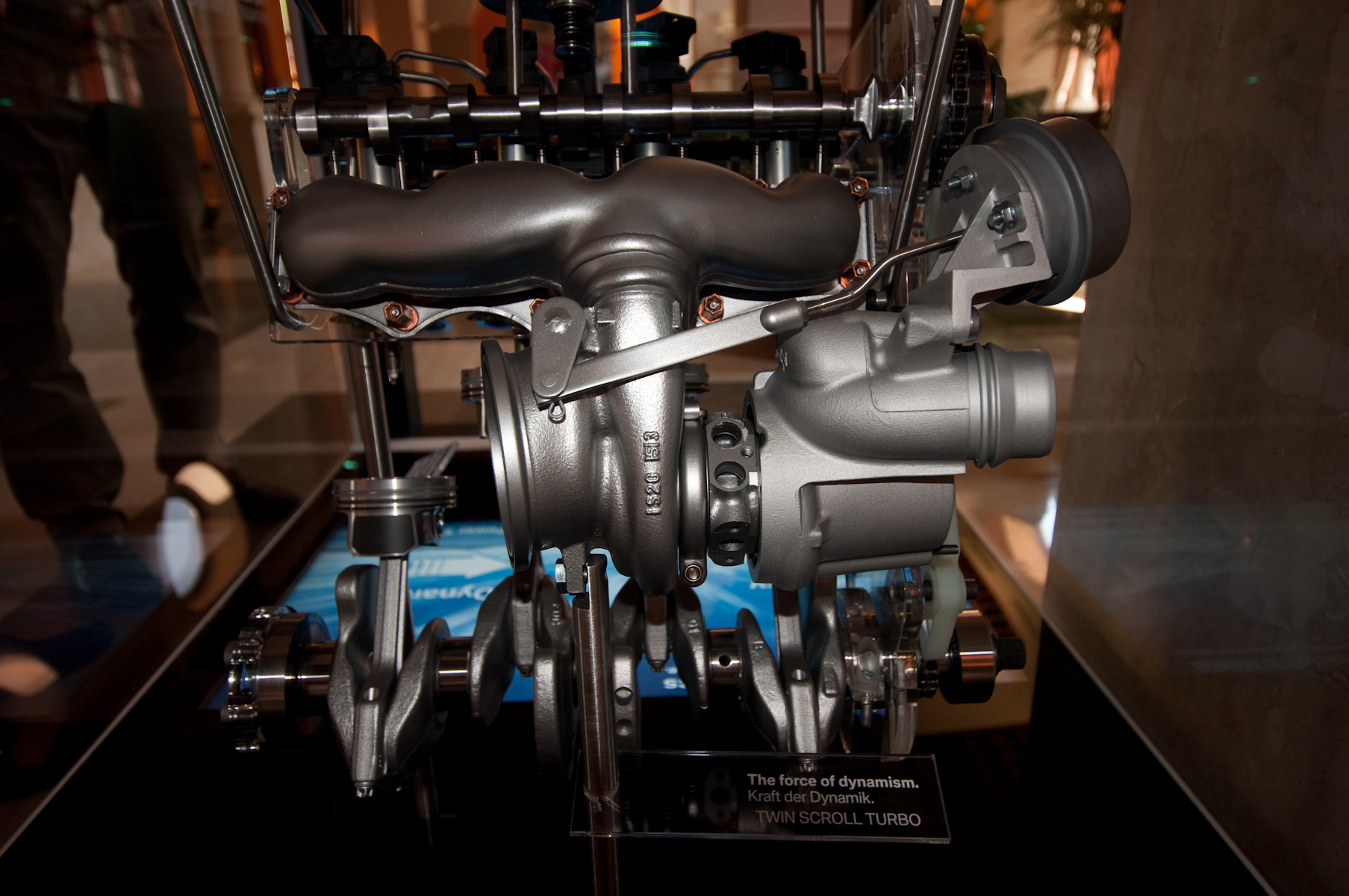
Besides its compact design, the placement of the turbos within the ‘V’ of the cylinder banks has one particular benefit: throttle response. As you decrease the distance from the exhaust valves to the turbine blades of the turbo, you decrease the amount of time it takes for the exhaust gases to reach, and spin the turbine – which in turn increases intake boost. Typical turbo charged engines suffer from ‘turbo lag’ – the time delay between stepping on the throttle (the exhaust pressures building, the turbos spooling, intake pressures building) and feeling acceleration. In short, BMW M’s design solution almost completely eliminates perceptible lag. It’s that good. (For a more in-depth consideration of turbocharging and the technology behind it, hit the jump to our previous tech feature.)
Also reducing turbo lag is BMW’s patented cross-bank exhaust manifold. Each cylinder bank of four cylinders donates exhaust gases from one of its cylinders to one scroll of one turbo. Therefore, both scrolls of both turbos have two dedicated cylinders feeding them at all times – but the pairing of these cylinders is where we find the magic. Based on the firing order of the V8 across both banks of cylinders, an exhaust pulse is evenly distributed to both scrolls of both turbos, keeping them spooled at all times, and across the entire RPM range. It sounds impressive on paper, but in practice – it is staggering. Oh, and the sound! The unique routing of each cylinder through the manifold results in a very characteristic sound, something different and exotic to your ears. It only lends further credence to the labeling of the M5 as a consummate supercar.
The new M5 has so little throttle lag that you might as well say it has none, in the sphere of turbo-charged cars. Although physics suggests it is impossible to entirely remove lag from a turbocharged engine, your senses from behind the wheel will struggle to find any. Only in higher gears will you find a small disconnect between the gas pedal and the rear wheels. After driving the M5 I can say with authority that the new turbo V8 is nearly “lag free” in my books – and that’s a big statement. Throttle response is direct and precise enough to throttle steer and drift through rather tight roadways – and there could be no greater praise heaped upon the turbo V8. Car control is everything – especially in an M car.
I have spent a considerable amount of time punching in laps with BMW’s X6/M, and I’ve always been impressed with its near instantaneous throttle response. But the M5′s mill is better – it closes the gap to perfection. Whereas in the X6/M you still wait for the power to build, in the M5 it’s just there. It’s always there. Ready to thrill you, ready to break the rear tires loose in a tail-out power slide, ready to stretch your cheeks back and widen your eyeballs.
BMW’s previous M5, the E60 M5 was an impressive car in every way. It’s engine was phenomenally good – revving to a stratospheric 8,250 rpm. The V10 blazed its way to maximum power output of 507 hp. But a key difference is found between the maniac V10 and the bludgeoner turbo V8: drivability. You see, the V10 managed 384 hp at 6,100 rpm, and it wasn’t until you hit 4000 + rpm that you began to feel a power surge. But the new M5′s V8 is different. It develops 100% – read it: one-hundred-percent of its torque at 1,500 rpm. This is axe-murderer appeal, the kind of brute twist that is borderline violent. There’s more… the torque output remains at 100% all the way until 5,750 rpm where it begins to drop off towards redline – but still not falling far below 400 lb ft at redline! What a machine. In fact, this engine produces 405 lb ft of torque a hair above its 1000 rpm idle. Parking valet boys: be forewarned.
So while it is true that the new M5 does not rev as high as its predecessor by approximately 1000 revs, it is also true that its powerband is approximately three times as wide – and that speaks volumes. As the saying goes, “horsepower sells cars, torque wins races.”
Maximum horsepower also finds a plateau to rest on between 6,000 rpm and 7,000 rpm. A full-bodied 560 horsepower leaves the crankshaft, dropping off slightly from 7,000 rpm to its 7,200 rpm redline. This drop off in power is seen on dynographs, but I assure you, it is not felt from the seat.
The new turbo V8 really is a marvel of engineering; a technological masterpiece better appreciated on the racetrack than on paper. On that note, stay tuned for our racetrack review of the new M5, to be published shortly. A full BMWBLOG First Drive review is soon to follow.

Volkswagen Tiguan Review

The 2012 Volkswagen Tiguan has been updated with a fresh exterior, revised engine range and the introduction of a new front-wheel drive entry model.

It’s been a good three and a bit years since the original Volkswagen Tiguan came to Australia. In that time the compact SUV has gone on to claim over 15,000 local sales and currently commands a respectable 5.3 per cent share of its market (8th place overall).
You have to remember that the compact SUV segment is crowded with 27 contenders, so an 8th place ranking from a German company competing with the Japanese, Koreans and now Chinese offerings, is very commendable.

In the grand scheme of things, the facelifted Volkswagen Tiguan isn’t all that different to the car it replaces. Mechanically it has gained more powerful engines, BlueMotion technology and is now available as a front-wheel drive for the entry model (manual only). Bluetooth connectivity has also been added to the range.

The range has grown to four with the introduction of a Tiguan 118TSI front-wheel drive manual ($28,490). The 1.4-litre four-cylinder twincharged engine is a direct transplant from the Golf, which shares its foundations with the Tiguan. The small but gutsy engine delivers a respectable 118kW and 240Nm of torque.

Despite being the most affordable variant in the line-up, the front-wheel drive 118TSI is actually quicker than the 103TDI diesel 4MOTION ($35,990 for the manual – 103kW – 320Nm) as it gets from 0-100km/h in 8.9 seconds, compared with 10.2 seconds.

Both variants now include Volkswagen’s much hyped BlueMotion technology, which in this application includes start/stop system (the engine turns itself off when stationary and instantly switches back on when the brake pedal is released or the accelerator is operated), brake energy recuperation (helping charge the battery without straining the engine) and an all-new coasting function for the 103TDI automatic ($38,490).

The coasting function automatically de-clutches the engine to allow for better, friction-free coasting when possible. Essentially it’s like putting your car into neutral to save fuel. Much like the engine start/stop system, it re-engages the transmission and engine the instant you touch either pedal or move the gear lever. It does this so seamlessly that you wouldn’t know it was actually turned on.

Volkswagen says the BlueMotion technologies have helped reduce fuel economy by as much as 7.7 per cent, which brings the 118TSI manual to 6.9L/100km, and 103TDI to 6.0L/100km for the manual or 6.2L/100km when coupled to a seven-speed DSG (dual-clutch automatic).
The original 125TSI variant has been replaced with a more powerful 132TSI (132kW – 280Nm), and the top of the range 147TSI has given way to the 155TSI (155kW 280Nm). The 132TSI is available with a six-speed manual or seven-speed DSG while the 155TSI is only available with DSG.

Technical details aside, looking at an updated Tiguan from the outside, it’s clear Volkswagen has managed to create a design that is reflective of a baby Touareg. Which brings the Tiguan look in line with the company DNA. This means a new grille, headlights and taillights plus the introduction of daytime running lights (DRLs) to the model (LEDs are an option).

The front end is now more Audi-like while the rear lights are almost identical to the ones found on the Volkswagen Golf R.
Volkswagen has left the interior mostly unchanged, but has finally added Bluetooth telephone connectivity and audio streaming plus a media device interface. This allows you to simply pair your iPhone (or other smartphone) via Bluetooth so that it will not only integrate telephone calls, but also wirelessly stream your music to the Tiguan’s eight-speaker system. If that’s a little too complicated, you can always just plug it in via a USB cable.

The most interesting fact about the new Tiguan range is that there is no difference in features between the front-wheel drive 118TSI and 4MOTION 103TDI or 132TSI. Apart from four-wheel drive support and the lack of a DSG option on the base model, equipment levels are identical. This means you can literally save yourself a good $5000-7000 if you can drive manual and are in the majority of buyers who won’t ever take your Tiguan off road.

To unveil the updated Tiguan, Volkswagen brought the automotive media to Byron Bay, where we set off for a two-hour drive to the Riverhouse via a series of twisty mountain roads, highways and even a stint on dirt. The aim was to highlight the Tiguan’s all-round capabilities on rough and smooth surfaces.
First impressions behind the wheel of a 132TSI Tiguan were pretty pleasant. Compared with the likes of a Subaru Forester or Hyundai ix35, the interior is certainly a classier place to be. The front seats are comfortable and there is great clear vision both front and rear.

Sit in the rear and you’ll realise there is plenty of room for four large adults, with the option of a fifth when necessary.
If interior ambience is important to you (and it should be, as that’s where you’re spending most of your time), Volkswagen offers a sunroof ($2000), satellite navigation ($2500 for 155TSI or $3000 for other variants) and leather upholstery as well as front sports seats with electric driver’s seat ($3500 for 155TSI or $4000 for other variants) as options.

If you really want to impress your friends, option in Park Assist 2 ($900 for 155TSI or $1400 for other variants), a system which will park your Tiguan for you. Seriously. It will do all the steering for you when reversing into 90-degree parking bays, as well as reversing into and driving out of parallel parking spaces. You just need to control the accelerator and brake pedal. Although the technology has been around for a number of years, it will still blow you away when it takes control and does a much better job of parking than you.

Around the twisty bends the 4MOTION Tiguan is well behaved with limited body roll even at high speed. There is a sense of confidence when pushed to its limits; it’s not as surefooted as a Forester but not far off. We found the electro-mechanical power-assisted rack & pinion steering a little jerky when pushed over uneven surfaces but in general it’s smooth and easy to drive.
Although Volkswagen’s dual-clutch automatic transmission system (DSG) still has its niggling issues when driven in traffic, the seven-speed DSG feels improved with the uprated engines, with much less hesitation than before.

Our time behind the wheel of a front-wheel drive 118TSI proved that it’s the one to go for if you can convince yourself to buy a manual.
Although the manual-only limitation is certain to limit sales initially (a DSG automatic variant is expected to arrive some time next year, Volkswagen says the delay is worldwide and not just for Australia), the fact that it comes with a heap of features and is $5500 cheaper than the previous base model Tiguan means it will attract new buyers to the brand.

It also helps that the 118TSI’s actual drivability, ride and handling and comfort are uncompromised by its front-wheel drive nature. This is because the 118TSI’s rear axle design is basically identical to the 4MOTION models (minus the prop-shaft, rear-axle differential and drive shaft). Frankly, with all the standard active safety systems onboard (anti-lock braking system, auto hold function, brake assist, electronic brake-pressure distribution, anti-slip regulation, electronic differential lock, electronic stabilisation program and engine braking control), the added benefit of four-wheel drive as a safety feature is less and less obvious.
Speaking of which, safety is top notch with six airbags and the already mentioned active safety features standard across the range. The Volkswage Tiguan has gained the maximum five star rating from EuroNCAP (New Car Assessment Programme) and been awarded the ‘Top Safety Pick’ rating from the American IIHC (Insurance Institute for Highway Safety).

Overall, the new 2012 Volkswagen Tiguan is a further improvement on one of the better cars in its segment. If you want something more unique than just another Japanese or Korean compact SUV, it’s hard to look past the Tiguan. It will also interest you to know that unlike some models in the Volkswagen stable, the Tiguan is actually built in Germany, so quality is top notch.

The New Model Car Reviews in 2011


2011 kia luxury car
2011 Kia Optima Review by Cars Staff - Cars Cars Staff reviews the 2011 Kia Optima. Cars is ... with the hybrid arriving in early 2011. Exterior With its creased sheet metal and low-slung shape, there's a luxury-car ...
Kia Unveils 2011 Kia Cadenza Sedan As expected from a luxury car, the 2011 Kia Cadenza will offer amenities such as a heated steering wheel, power adjustable thigh support for the front seats and heated and ...
2011 Kia Sportage EX Luxury « Auto Show by Auto Trader You might not think to use the words “luxury” and “Kia” in the same sentence, but Kia has with this compact SUV, and after a week with the car, I have to agree.

Ford Fiesta hatchback Coming in 2012


Ford Fiesta hatchbackFord has truly taken the Indian market quite seriously and to show that it means business, it has promised no less than eight new models in the recent future.The company has already tasted success with the ‘made for India’ Figo hatchback and now expects the same from the Fiesta sedan, which it has launched recently.

Following this trend, Ford is getting ready to launch the hatchback version of the Fiesta, which it will position above the Figo as a premium hatchback. The new Fiesta will sport the same Kinetic design inspired front end as seen on the newly launched sedan.

This translates into the same two tier grille and sweeping large headlamps up front. However at the back, sporty overtones like a short hatch and
spoiler coupled to swanky large taillamps will give this hatchback added character.

Inside, the hatchback shares the same interiors as the sedan worldwide and India will not be an exception. This means premium features like climate control and Bluetooth connectivity will also be found in the hatchback. However the cruise control feature might not be offered in the hatch version of the Fiesta.

To ensure cost effectiveness, Ford is expected to offer the new car with the same 1.5-litre petrol and diesel engines as found in the newly launched sedan version. However we also hear that Ford might plonk in a retuned version of the smaller 1.2-litre petrol engine from the Figo. This version though will be the entry level model which will make it possible for Ford to price the hatch very competitively.

Fiat Grande Punto Facelift Coming in 2012


Fiat Grande Punto Facelift
Rumours have been floating around of the Fiat Grande Punto getting a mid-life facelift. It is being said that the Grande Punto will sport the new Evo front grille and design and there will changes on the inside as well.

After speaking to one of our sources, it has been confirmed that the Grande Punto facelift will be out sometime in late 2012 or early 2013. The changes that will be made on the car haven’t been decided yet, but a facelift is definitely in pipeline. the Grande Punto will get the fascia and refreshed interiors from the Punto Evo. The mechanicals will remain the same.